
Making Room for Jesus
Listen to the Devotional Below
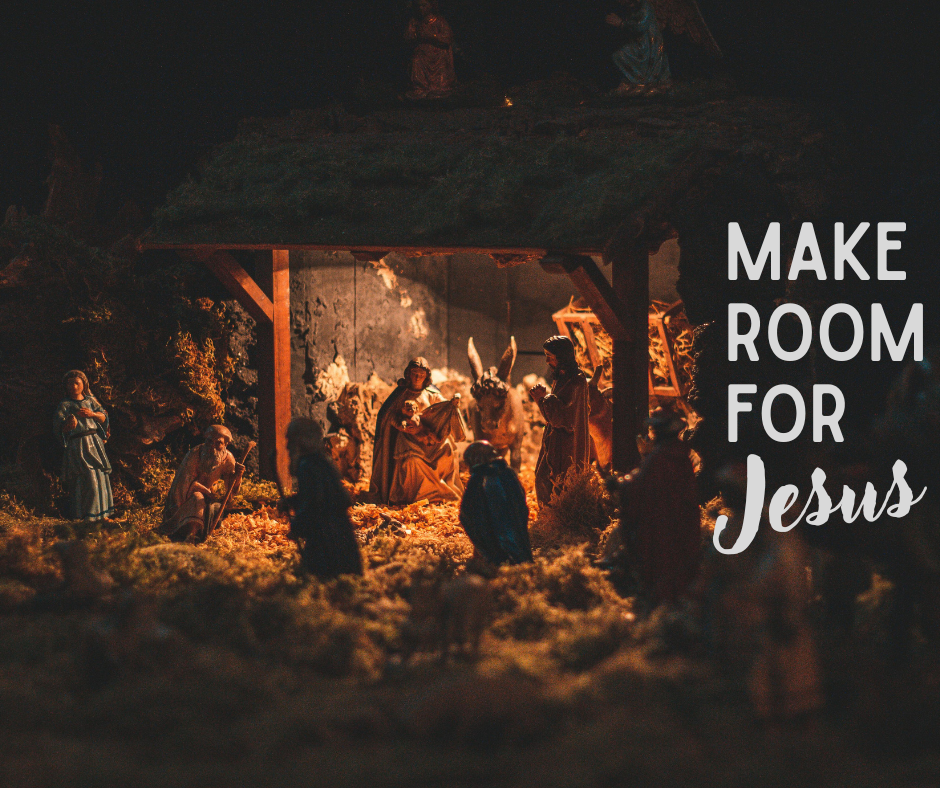
The Christmas Story You Thought You Knew: Making Room for Jesus
We all know the Christmas story, don't we? Mary, heavily pregnant, riding a donkey through the night. Joseph frantically knocking on door after door in Bethlehem, hearing "No vacancy!" at every inn. Finally, in desperation, they settle for a stable where Jesus is born among the animals. That same night, shepherds rush in after seeing angels, and wise men arrive with their gifts of gold, frankincense, and myrrh. It's a beautiful, touching scene we've carried in our hearts since childhood.
But what if much of what we "know" isn't quite what the Bible actually says?
Unpacking the Real Story
When we carefully examine Luke chapter 2, some fascinating details emerge that challenge our traditional understanding. The text tells us that Joseph went to Bethlehem to register for the census, taking Mary with him. Notice anything missing? There's no mention of a donkey. While donkeys were common transportation and Mary may well have ridden one, Scripture doesn't actually tell us this detail.
More significantly, the text says "while they were there, the time came for the baby to be born." This small phrase changes everything. Mary and Joseph weren't rushing into town the night she went into labor. They had been there for some time—long enough for Mary to complete her time of pregnancy. Joseph was a responsible husband who planned ahead, ensuring they arrived with time to spare.
The Inn That Wasn't
Here's where things get really interesting. The Greek word translated as "inn" in most Bibles is actually kataluma, which means "guest room." Bethlehem wasn't a bustling city with multiple hotels—it was a tiny village of perhaps 300 people, not situated on any major road. Archaeological evidence suggests there likely wasn't an inn at all.
Moreover, Middle Eastern hospitality culture makes the traditional story nearly impossible. In that culture, you would never arrive in your ancestral hometown and be turned away. Family would always make room, no matter how crowded things became.
So what really happened? Ancient Palestinian homes typically consisted of one main room where the family lived, sometimes with a separate guest room. The front area of the home was reserved for animals, who were brought inside each night (especially in winter) to help keep the space warm. A stone manger for feeding the animals was built right into this area.
When Luke writes that there was "no room in the guest room," he's telling us that other relatives had already filled that space. So Mary and Joseph stayed in the main family room—and when Jesus was born, He was laid in the manger in the front area of the house. Jesus wasn't born in isolation in some distant stable. He was born in the heart of a home, surrounded by family who made space for Him despite the crowded conditions.
The Shepherds and the Magi
The angel's specific words to the shepherds take on new meaning with this understanding. When the angel said they would find the baby "wrapped in cloths and lying in a manger," this wasn't just an identifying detail. Shepherds were considered the lowest class in society. The angel was essentially telling them, "You're welcome here. You'll find Him in the part of the house where people like you are allowed."
The first people invited to meet the newborn King weren't the wealthy or powerful—they were the poor, the outcasts, the overlooked.
As for the wise men? They didn't arrive that night. Most scholars believe Jesus was a toddler—perhaps two or three years old—by the time the Magi found Him. That's why Matthew's account mentions a "house" rather than a stable, and why Herod ordered the killing of boys two years old and under. The gold, frankincense, and myrrh the Magi brought? That supernatural provision funded the family's escape to Egypt when Herod tried to kill Jesus.
Making Room Today
Why does any of this matter? Because the real story carries a powerful message we desperately need to hear.
We've been told there was "no room at the inn," imagining heartless innkeepers turning away a pregnant woman. But the truth is more convicting: a family made room. They didn't have a perfect setup. They didn't have ideal circumstances. Their home was crowded, messy, and filled with the ordinary chaos of life. But they created space for Jesus anyway.
Two thousand years later, we who call ourselves Christians often have no room for Him.
Our lives are full—full of work obligations, social commitments, family activities, and endless distractions. We scroll mindlessly through our phones, bury ourselves in projects, and chase after status, success, and security. We say Jesus is Lord of our lives, but we give Him no lordship. We call Him Savior, but we don't let Him save anything because we're too busy trying to save ourselves.
We've become like that mythological innkeeper, constantly saying "No vacancy" to the King of Kings.
An Invitation to Intimacy
Jesus doesn't demand perfection before He'll enter our lives. He didn't come into perfect circumstances at His birth, and He doesn't require perfect circumstances now. He's asking to be invited into the mess—into the crowded, chaotic, imperfect reality of our daily existence.
Making room for Jesus doesn't mean adding more religious activity to an already overwhelming schedule. It means reorienting your entire life around Him. It means talking to Him throughout your day like you'd talk to a friend. It means reading His Word, even if you don't understand everything at first. It means turning on worship music and letting your mind focus on something beyond yourself. It means pausing in the shower to thank Him for hot water and recognizing the countless blessings we take for granted.
Making room means inviting Him into your decisions, your struggles, your relationships, and your pain. It means letting Him be central rather than peripheral.
This Christmas Season
As you navigate the busyness of this season—the parties, the shopping, the family gatherings, the work deadlines—remember what Christmas is truly about. Not perfect nativity scenes or flawless traditions, but God making Himself small enough to enter our world, to be born in the midst of ordinary family life, to be laid in a feeding trough because there was no other space.
He came into the mess then, and He wants to come into your mess now.
Will you make room for Him?
-----
5-Day Christmas Devotional: Making Room for Jesus
Day 1: The Hospitality of Heaven
Reading: Luke 2:1-7
Devotional: The *real* Christmas story challenges of our traditions and assumptions. Jesus most likely wasn't born in isolation in a separate stable, but surrounded by family who made room despite cramped quarters. They didn't wait for perfect circumstances—they simply created space. How often do we tell Jesus there's "no room" because our lives feel too cluttered, too messy, too imperfect? The family in Bethlehem teaches us that making room for Christ doesn't require pristine conditions; it requires willing hearts. This Christmas season, examine where you've filled your life so completely that there's no space for the King of Kings. What needs to be rearranged—not perfected, but simply shifted—to welcome Him into the center of your daily routine?
Day 2: Invited Into the Mess
Reading: Matthew 1:18-25; Luke 1:26-38
Devotional: Jesus entered humanity through uncomfortable, complicated circumstances—an unexpected pregnancy, social stigma, and uncertain futures. He didn't demand Mary and Joseph clean up their situation first; He entered right into the middle of it. We often believe we must have our lives together before approaching God, but the incarnation proves otherwise. Jesus specializes in meeting us in our mess—our anxiety, our broken relationships, our financial stress, our health crises. He doesn't wait at a distance for you to fix everything. Today, stop trying to tidy up before inviting Him in. Whatever feels chaotic or overwhelming right now, speak His name into that space. Let Him be born in the midst of your reality, not your fantasy of perfection.
Day 3: The Lowly Welcomed First
Reading: Luke 2:8-20
Devotional: The angels announced Christ's birth first to shepherds—society's outcasts, considered the lowest of the low. God could have invited kings, priests, or scholars first, but He chose the forgotten and overlooked. The specific detail "wrapped in cloths and lying in a manger" wasn't just identification; it was invitation. It told the shepherds, "You belong here. This King welcomes you." Do you feel too broken, too sinful, too insignificant for God's attention? The Christmas story declares otherwise. Jesus came for the overlooked and marginalized. Your past doesn't disqualify you; your status doesn't matter. If you feel like an outcast, you're exactly who Jesus came to reach. Receive His invitation today—you are wanted, welcomed, and worthy of His presence.
Day 4: Reorienting Around the King
Reading: Matthew 2:1-12
Devotional: The Magi traveled for months, possibly years, to worship Jesus. They reoriented their entire lives around finding the newborn King, bringing costly gifts and risking Herod's wrath. Their journey required sacrifice, commitment, and singular focus. Contrast this with our tendency to pencil Jesus into our already-packed schedules. We want the benefits of following Christ without the reorientation of our priorities. True discipleship means Jesus isn't an add-on to our existing life—He becomes the center around which everything else revolves. What would it look like to reorient your schedule, your finances, your ambitions around Him? The Magi's gifts later funded the holy family's escape to Egypt. When we prioritize Jesus first, He provides for what's ahead. Make Him central, not peripheral.
Day 5: Creating Space Daily
Reading: John 1:1-14
Devotional: "The Word became flesh and dwelt among us"—literally "pitched His tent" with humanity. Jesus didn't maintain distance; He moved into the neighborhood. He invites us into ongoing relationship, not occasional visits. Making room for Jesus isn't a one-time decision but a daily practice. It's pausing in the shower to express gratitude. It's reading Scripture even when you don't understand everything. It's talking to Him like a friend throughout your day. It's playing worship music while cooking dinner. These aren't religious obligations but relational opportunities. As Christmas approaches with its busyness, resist the tyranny of the urgent. Create margins—small spaces where Jesus can speak, lead, and transform you. The greatest gift you can give or receive this season isn't wrapped in paper; it's the presence of Emmanuel, God with us.
Making Room for Jesus
We all know the Christmas story, don't we? Mary, heavily pregnant, riding a donkey through the night. Joseph frantically knocking on door after door in Bethlehem, hearing "No vacancy!" at every inn. Finally, in desperation, they settle for a stable where Jesus is born among the animals. That same night, shepherds rush in after seeing angels, and wise men arrive with their gifts of gold, frankincense, and myrrh. It's a beautiful, touching scene we've carried in our hearts since childhood.But what if much of what we "know" isn't quite what the Bible actually says?
Read More
No More Slave Mentality
Life has a way of getting harder right when we think we're finally stepping out in faith. We convince ourselves that obedience to God should make things easier, smoother, more comfortable. But what happens when the opposite occurs? What happens when we take that leap of faith and suddenly the ground beneath us feels even more unstable?
Read More
Gratitude Is A Virtue Not A Feeling
When we think about gratitude, most of us wait for a warm fuzzy feeling to hit us. We expect goosebumps, a stirring in our hearts, or at least a momentary rush of appreciation. But what happens when that feeling doesn't come? What happens when life feels more like a pile of torn-up concrete and rebar than a smooth, well-paved road?
Read MoreStay Connected with Revive
Sign up for our newsletter to stay informed about upcoming events, sermons, and community updates. Don’t miss out on what’s happening at Revive Church—delivered right to your inbox.


